
Insulation Materials & Types in Vernon, CA
Energy-Saving Insulation Materials & Types in Vernon for Vernon, CA Homes — Licensed & Insured
Compare insulation materials for Vernon, CA homes — R-values, costs, pros & cons. Expert guide from Clear Path Insulation. Call 323-416-2078 for a free assessment.
Choosing the right insulation material is one of the most consequential decisions a homeowner in Vernon, CA can make. Vernon sits in the heart of the Los Angeles Basin, where summers regularly push temperatures above 95°F, and attic spaces can reach a punishing 150°F or more. While coastal breezes from the nearby Pacific occasionally offer relief, they also carry moisture-laden air that can degrade certain insulation materials over time. Unlike mountain communities, Vernon rarely faces hard freezes, but the dramatic swing between scorching summer days and cooler winter nights creates year-round thermal stress on building envelopes.
R-value measures an insulation material’s resistance to heat flow. The higher the R-value, the better the material slows heat transfer — keeping conditioned air inside and brutal summer heat out. For Vernon homeowners, selecting the correct R-value is not just a comfort issue; it directly determines how hard your HVAC system works and how much you pay in energy bills every month.
This guide covers every major insulation material available to Vernon homeowners, explaining real-world performance, cost, and best-use scenarios so you can make a fully informed decision.
Understanding Insulation Types for Vernon Homes
Vernon falls within California’s Climate Zone 9 — a designation that carries specific energy code requirements under Title 24, California’s Building Energy Efficiency Standards. These codes mandate minimum R-values for attics, walls, floors, and ducts in both new construction and qualifying retrofit projects. Understanding which insulation category meets those standards is the starting point for any upgrade.
The insulation market offers six primary material categories: spray foam, blown-in loose-fill, fiberglass batts, mineral wool, cellulose, and rigid foam board. Each performs differently under Vernon’s conditions. Much of Vernon’s housing stock was built between the 1940s and 1980s, meaning many homes have older wood-frame walls with minimal or degraded insulation, uninsulated crawl spaces, and attics that were never brought up to modern standards. These older construction types often call for flexible installation methods — blown-in and spray foam excel here because they conform to irregular cavities without requiring wall demolition.
Read moreShow less
Newer construction and addition projects have more flexibility to use batts or rigid foam during framing. Wildfire risk in the broader Los Angeles region also nudges many homeowners toward non-combustible options like mineral wool. The sections below break down every material in detail so you can match the right product to your specific home, budget, and goals.
How Vernon’s Climate Affects Your Insulation Material Choice
Vernon’s position within Climate Zone 9 creates a distinct set of challenges that should guide every insulation decision. The dominant concern is cooling load: attics in Vernon regularly hit 140–150°F during July and August, turning under-insulated upper floors into ovens. California Title 24 currently recommends a minimum of R-38 in attics for this climate zone, with R-49 providing meaningfully better performance and faster payback given the length and intensity of cooling seasons.
Moisture management is a secondary but important consideration. While Vernon is not in a high-humidity zone like the Gulf Coast, proximity to the ocean means dew points can rise overnight, and coastal air carries salt and moisture that can slowly compromise paper-faced batts or untreated cellulose if vapor control is neglected. Closed-cell spray foam or moisture-resistant mineral wool board in exterior assemblies addresses this risk directly.
Read moreShow less
For wildfire-adjacent risk awareness, non-combustible materials — mineral wool and rigid foam with appropriate facings — align with broader Los Angeles County fire resilience goals. For existing homes with enclosed walls, dense-pack cellulose or blown-in fiberglass minimizes disruption. Crawl spaces in older Vernon properties benefit most from rigid foam board or closed-cell spray foam on walls and rim joists, preventing ground moisture from migrating upward. New additions allow for optimal material placement from the start, making batts or mineral wool the practical choice during open framing phases.
Free, no-obligation estimates
Talk to Clear Path Insulation
Tell us what you need and we’ll take it from there.
Insulation Materials Available in Vernon, CA
Spray Foam Insulation
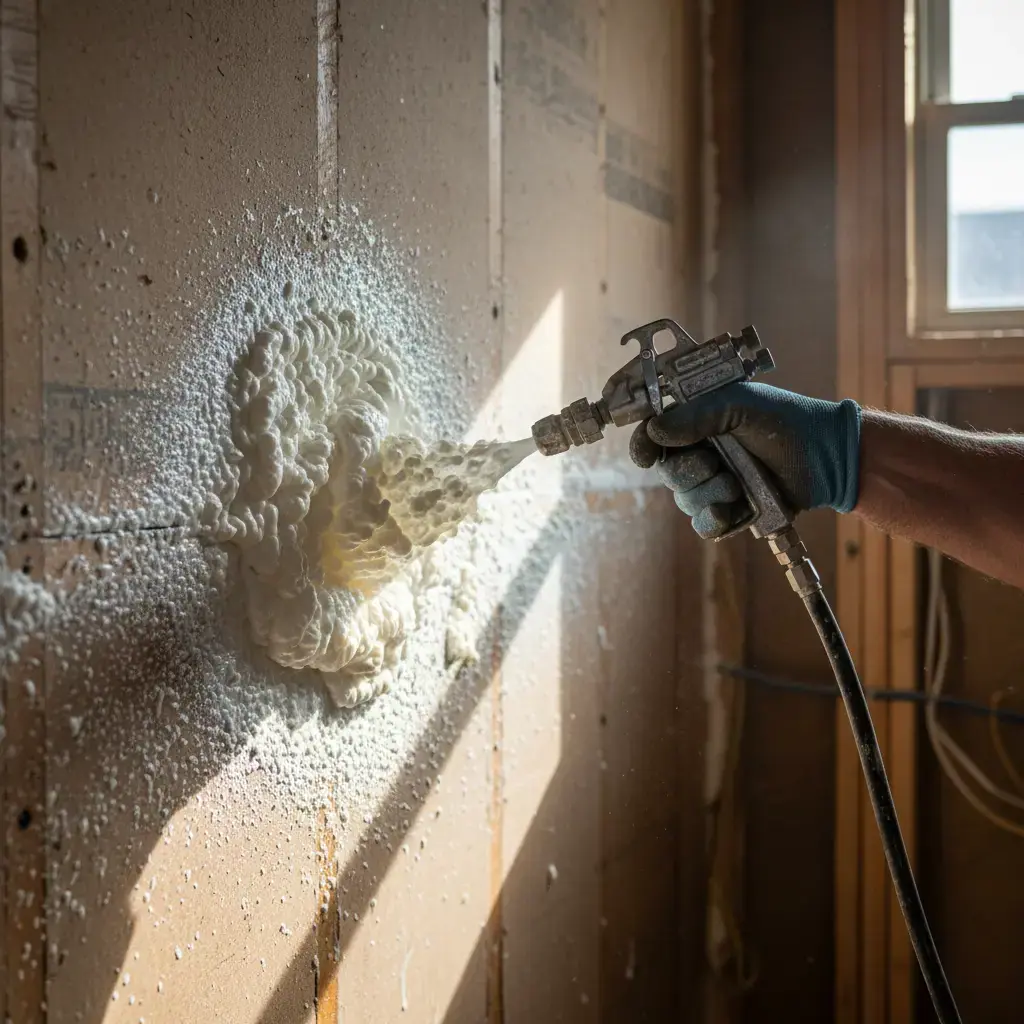
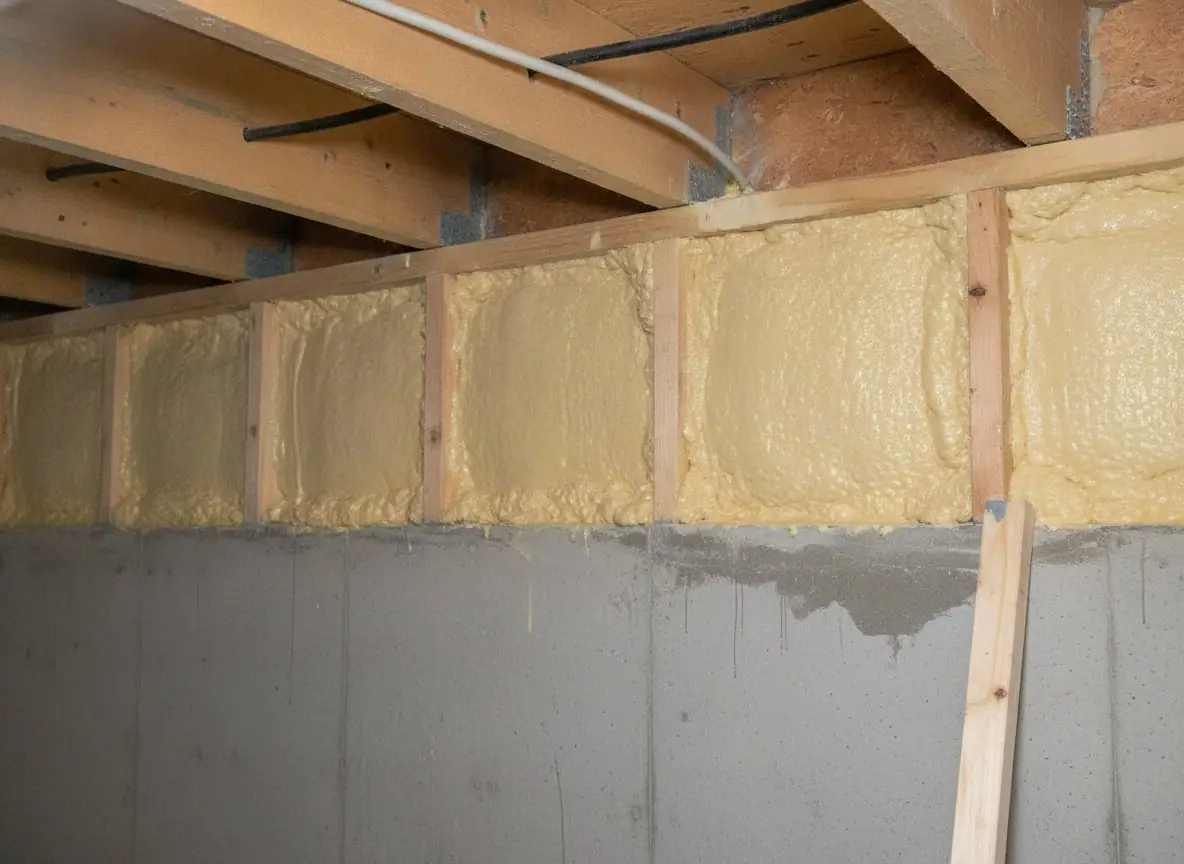
Spray polyurethane foam (SPF) is applied as a liquid that expands and cures into a solid layer. It comes in two forms: open-cell (R-3.5 to R-3.8 per inch) and closed-cell (R-6 to R-7 per inch). In Vernon’s heat-intense climate, closed-cell spray foam is particularly effective because it also acts as a vapor and air barrier, blocking the moisture-laden coastal air from infiltrating wall cavities. Open-cell foam works well for interior applications like attics and interior walls where cost is a factor.
Pros: Superior air sealing, highest R-value per inch, doubles as moisture barrier, long lifespan.
Cons: Highest upfront cost, requires professional installation, cannot be easily removed.
Best applications: Attic rafters, rim joists, crawl spaces, hard-to-reach cavities.
Approximate installed cost: $1.50–$3.50 per square foot (open-cell); $2.50–$5.00 per square foot (closed-cell).
Learn moreBlown-In (Loose-Fill) Insulation
Blown-in insulation — typically fiberglass or cellulose — is mechanically blown into place using a hose, making it ideal for Vernon’s older homes where wall cavities are already enclosed. R-values range from R-2.2 to R-3.8 per inch depending on material density. It settles into irregular spaces and around existing framing, achieving coverage that batts cannot match. For attic floors, blown-in is one of the most cost-effective upgrades available.
Pros: Minimal disruption to existing finishes, excellent coverage of odd-shaped areas, fast installation.
Cons: Can settle over time, requires vapor management in humid conditions, may need top-ups.
Best applications: Attic floors, enclosed wall cavities, bonus room ceilings.
Approximate installed cost: $1.00–$2.50 per square foot.
Fiberglass Batt Insulation
Fiberglass batts are the most widely recognized insulation product, pre-cut to fit standard stud and joist spacing. R-values range from R-11 to R-38 depending on thickness. For Vernon’s new construction and open-framing renovation projects, batts are a budget-friendly and readily available option. However, proper installation is critical — gaps, compression, and misfit cuts significantly reduce real-world performance in the field.
Pros: Low material cost, widely available, non-combustible, DIY-friendly in open framing.
Cons: Poor performance if improperly installed, does not air-seal, susceptible to moisture damage.
Best applications: Open wall cavities during remodel, floor joists, attic floor between joists.
Approximate installed cost: $0.50–$1.50 per square foot.
Mineral Wool / Rockwool Insulation
Mineral wool — also marketed as Rockwool or slag wool — is made from volcanic rock or industrial slag spun into dense fibers. R-values range from R-3.0 to R-4.3 per inch. It is inherently non-combustible, fire-resistant to temperatures exceeding 1,800°F, and naturally repels moisture. Given the Los Angeles region’s elevated wildfire risk and Vernon’s hot climate, mineral wool’s fire resistance and dimensional stability under heat make it a compelling choice for both comfort and safety.
Pros: Fire-resistant, moisture-repellent, excellent sound dampening, maintains R-value over time.
Cons: Higher cost than fiberglass batts, heavier to handle, limited availability in some thicknesses.
Best applications: Exterior walls, attic assemblies, garage-adjacent walls, sound-sensitive spaces.
Approximate installed cost: $1.00–$2.00 per square foot.
Cellulose Insulation
Cellulose is made from recycled paper products treated with fire retardants, offering R-values of R-3.2 to R-3.8 per inch. As a blown-in material, it shares the installation flexibility of fiberglass loose-fill but offers a higher recycled content — typically 80–85% post-consumer material. Cellulose performs well in Vernon’s climate as long as moisture intrusion is controlled; it can absorb and slowly release minor moisture, which helps manage mild humidity fluctuations common with coastal air patterns.
Pros: High recycled content, good thermal mass, cost-competitive, fills cavities thoroughly.
Cons: Can absorb excess moisture if vapor barrier is absent, heavier than fiberglass loose-fill, may settle.
Best applications: Attic floors, existing enclosed walls (dense-pack), floor assemblies.
Approximate installed cost: $0.75–$2.00 per square foot.
Foam Board (Rigid) Insulation
Rigid foam boards — including EPS (expanded polystyrene), XPS (extruded polystyrene), and polyisocyanurate — provide R-values from R-3.8 to R-6.5 per inch. Their rigid structure makes them suitable for applications where space is limited but high R-value is needed: exterior wall sheathing, under-slab applications, and crawl space walls. Polyiso board performs exceptionally well in Vernon’s warm climate since it achieves its rated R-value most accurately in high-temperature conditions.
Pros: High R-value per inch, moisture-resistant (XPS/polyiso), excellent for continuous insulation layers.
Cons: Requires careful seaming and sealing, must be covered (fire code), more expensive than batts.
Best applications: Exterior sheathing, crawl space walls, under-slab, basement walls.
Approximate installed cost: $1.25–$3.00 per square foot installed.
Why Vernon Homeowners Trust Clear Path Insulation for Insulation
At Clear Path Insulation, we bring deep local knowledge and professional credentials to every project in Vernon and the surrounding communities. Here is what sets us apart:
Expertise across all insulation types:
Expertise across all insulation types:Our crews are trained and experienced with every material category — spray foam, blown-in, batts, mineral wool, cellulose, and rigid foam — so we recommend what is right for your home, not just what is easiest to install.
Licensed and fully insured:
Licensed and fully insured:We carry all required California contractor licensing and comprehensive liability insurance, protecting your home and your investment throughout the project.
Manufacturer-certified installers:
Manufacturer-certified installers:Our team holds certifications from leading insulation manufacturers, ensuring materials are applied to spec and qualifying you for full product warranties.
Free insulation assessment:
Free insulation assessment:We evaluate your current insulation levels, identify deficiencies, and provide a clear, no-obligation report before any work begins.
Warranty coverage:
Warranty coverage:All installations are backed by both manufacturer product warranties and our own workmanship guarantee.
Local energy code and rebate expertise:
Local energy code and rebate expertise:We stay current on California Title 24 requirements and available utility rebates — including Southern California Edison and SoCalGas programs — helping you maximize savings.
FAQ
Insulation Materials FAQ for Vernon Homeowners
What is the best insulation type for Vernon’s climate?
There is no single “best” material — the right choice depends on the application area and your home’s construction. For attics, blown-in fiberglass or cellulose to R-38 or R-49 delivers excellent cost-to-performance value. For air sealing and crawl spaces, closed-cell spray foam is hard to beat. For exterior walls in new construction or remodels, mineral wool or rigid foam continuous insulation adds both thermal performance and fire resilience suited to the Los Angeles region.
What R-value do I need for my Vernon home’s attic?
California Title 24 for Climate Zone 9 sets a minimum attic R-value of R-38 for most retrofit projects. However, upgrading to R-49 is increasingly common and typically pays back within a few years through reduced cooling costs given Vernon’s intense summer heat. If your attic currently has R-11 or less — common in homes built before 1978 — even reaching R-38 can cut attic heat transfer by more than 50%.
How do insulation material costs compare in Vernon?
Fiberglass batts are the lowest-cost entry point at roughly $0.50–$1.50 per square foot installed. Blown-in fiberglass and cellulose run $0.75–$2.50 per square foot. Mineral wool batts fall between $1.00–$2.00 per square foot. Rigid foam board ranges from $1.25–$3.00 per square foot. Spray foam is the highest investment at $1.50–$5.00 per square foot depending on open- or closed-cell type, but it also delivers the longest lifespan and eliminates air infiltration costs simultaneously.
Is attic insulation different from wall insulation in Vernon homes?
Yes, significantly. Attic insulation primarily fights radiant and convective heat gain from above — a major issue in Vernon summers — and depth is less restricted, allowing you to achieve R-49 or higher relatively easily with blown-in material. Wall insulation is constrained by cavity depth (typically 3.5 to 5.5 inches in older homes), making higher-R-value-per-inch products like spray foam or mineral wool more important in wall assemblies. Walls also require more attention to vapor management and air sealing than attic floor applications.
How much can I save on energy bills by upgrading insulation in Vernon?
The U.S. Department of Energy estimates that properly air-sealing and insulating can reduce heating and cooling costs by 15–20% annually. In Vernon, where cooling dominates the energy bill, homeowners upgrading from minimal attic insulation to R-49 commonly report summer energy savings of $30–$80 per month depending on home size and existing HVAC efficiency. Combining insulation upgrades with duct sealing amplifies those savings further.
Are there rebates or tax credits available for insulation in California?
Yes. California homeowners can access multiple incentive programs. The federal Inflation Reduction Act provides a tax credit of up to 30% (capped at $1,200 per year) for qualifying insulation improvements under the Energy Efficient Home Improvement Credit. Southern California Edison and SoCalGas both offer rebates for insulation upgrades completed by qualifying contractors. The California Energy Commission’s programs and TECH Clean California initiative also provide pathways to rebates depending on your home’s utility provider and scope of work.
Can I install insulation myself, or do I need a professional in Vernon?
Some homeowners successfully add fiberglass batts to open attic floors as a DIY project. However, any work involving spray foam requires professional equipment and training. Dense-pack blown-in for enclosed walls, crawl space encapsulation, and air sealing around penetrations all benefit significantly from professional installation to meet California code and achieve rated R-values. Improper installation can void manufacturer warranties and may not qualify for utility rebates, which typically require work by a licensed contractor.
Does insulation help with noise reduction in Vernon?
Yes — especially mineral wool and dense-pack cellulose. Vernon’s proximity to industrial corridors and the broader Los Angeles urban environment means exterior noise can be a real quality-of-life concern. Mineral wool in particular has a dense fiber structure that absorbs sound waves effectively in wall assemblies. Closed-cell spray foam also reduces airborne noise by eliminating the air gaps through which sound travels. If noise reduction is a priority alongside thermal performance, mention it during your assessment so we can select the optimal material combination.
Get a Free Insulation Assessment in Vernon
Not sure which insulation material is right for your Vernon home? Clear Path Insulation offers a comprehensive, no-obligation insulation assessment at no cost to you. Our trained specialists will evaluate your current insulation levels, identify air leakage points, and provide honest recommendations matched to your home’s construction, your budget, and the realities of Vernon’s climate — from scorching summer attic temperatures to coastal moisture concerns.
We are fully licensed, insured, and familiar with California Title 24 requirements and local utility rebate programs that can offset your project cost. Call us today at 323-416-2078 to schedule your free assessment. Let Clear Path Insulation help you choose the right material, installed correctly, so your home stays comfortable year-round.
Why choose us
Why choose Clear Path Insulation?
Free estimates
Get a clear, no-obligation estimate before any work begins.
Licensed & insured
Your property and our crew are protected on every project.
Residential & commercial
One team for homes, multi-family and commercial properties.
Locally owned & operated
A local team serving your community and the surrounding area.
Get in touch
Find insulation help near you
Request a free estimate online or give us a call — our team will follow up quickly.
- Call us(323) 416-2078
- Visit5333 S Downey Rd, Vernon, CA 90058
- HoursMon-Sun 07:00-19:00