
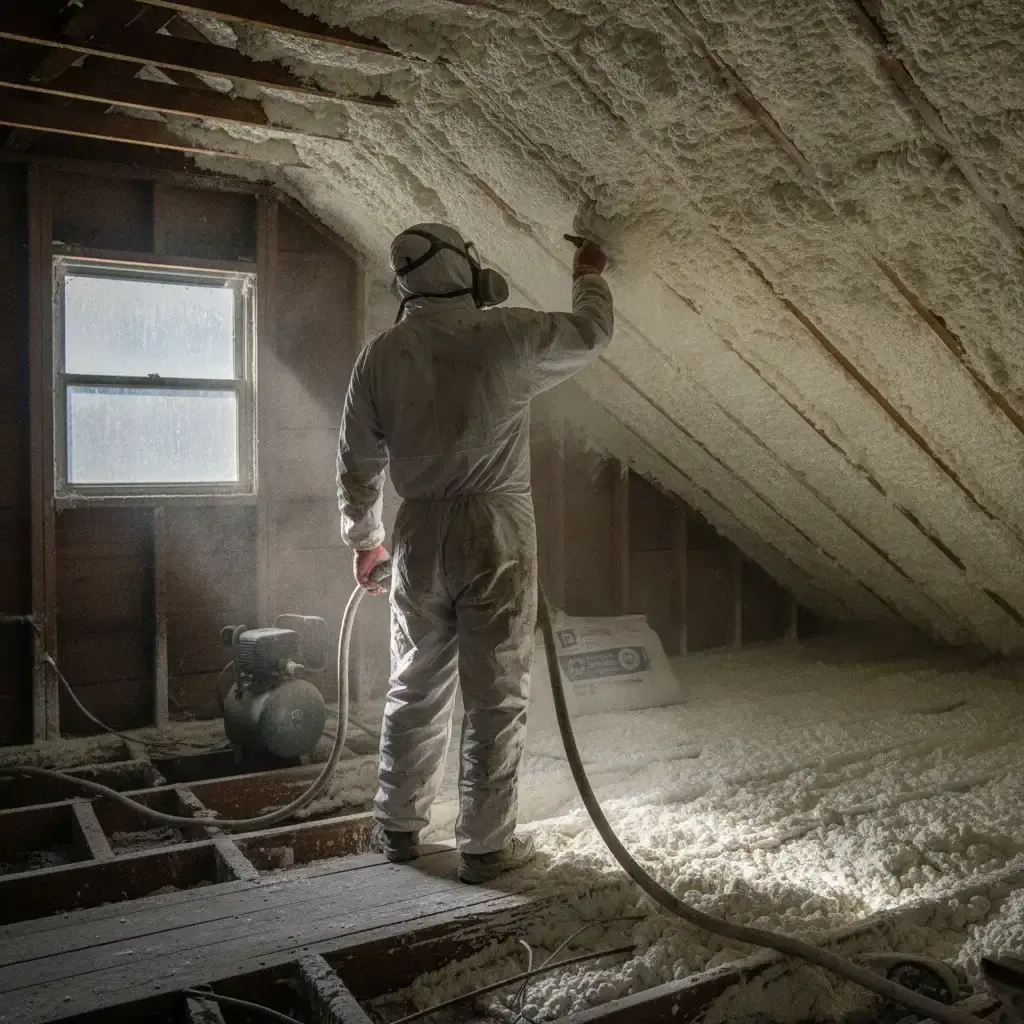
Air Sealing in Vernon, CA
Professional Air Sealing in Vernon, CA — Licensed, Insured & Locally Owned
Need air sealing in Vernon, CA? Clear Path Insulation offers diagnostic-driven air sealing for homes & warehouses. Call (323) 416-2078 for a free estimate.
Air sealing is the process of identifying and permanently closing gaps, cracks, and openings in a building’s envelope — the boundary between conditioned interior space and the outside world. In Vernon, CA, a densely industrialized city where aging concrete-block warehouses sit alongside converted live-work lofts and older residential structures, uncontrolled air leakage drives up energy bills, allows industrial pollutants to infiltrate living and working spaces, and accelerates HVAC wear in an already warm Southern California climate.
Clear Path Insulation specializes in professional air sealing services tailored specifically to Vernon’s unique building stock and environmental conditions. Our certified technicians use diagnostic tools and proven sealing materials to create a tighter, healthier, and more energy-efficient envelope — whether you own a commercial warehouse, a multi-family property, or a residential structure in or near Vernon’s industrial corridor. Call us today at (323) 416-2078 to schedule a free assessment.
Understanding Air Sealing: What It Is and Why It Matters
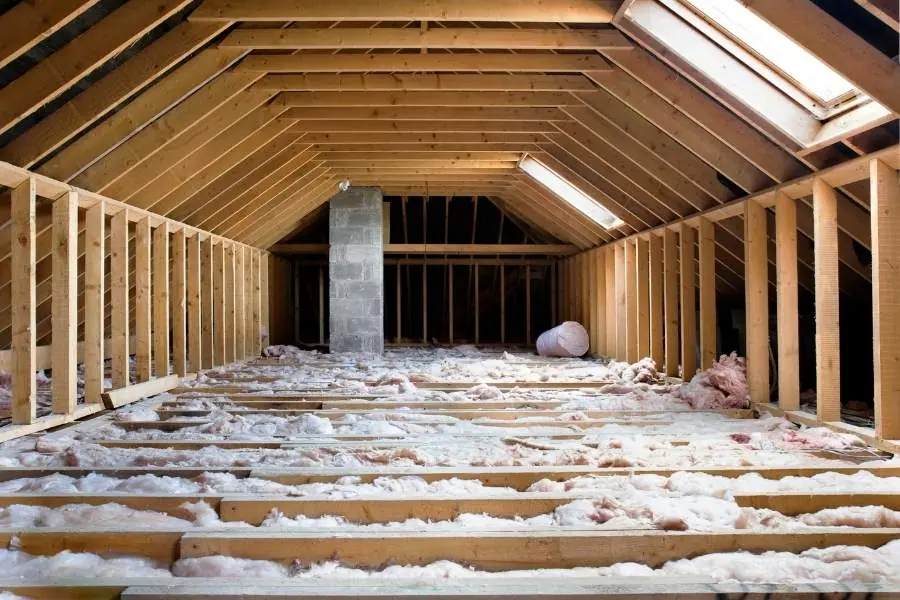
Air sealing is fundamentally about controlling where air moves through a structure. Every building has a thermal envelope — walls, roof, floor, windows, and doors — that is meant to separate climate-controlled interior space from unconditioned exterior air. Over time, and sometimes from the very moment of original construction, small gaps form around electrical outlets, plumbing penetrations, recessed lighting fixtures, attic hatches, window frames, and wall-to-ceiling junctions. These gaps create pathways that allow warm, humid, or polluted outside air to push in while cooled or heated inside air escapes.
The concept of intentional air sealing as a building science practice became prominent in the United States following the energy crises of the 1970s, when the Department of Energy began funding research into residential energy losses. Studies showed that air infiltration and exfiltration could account for 25–40% of a building’s total heating and cooling load. Since then, building codes across California — including updates under Title 24, California’s Energy Code — have increasingly required air sealing as part of new construction and major renovations. Vernon, despite being primarily a commercial and light-industrial municipality, contains structures built across multiple eras, many of which predate modern air-barrier requirements entirely.
Read moreShow less
In Vernon’s context, air sealing is relevant across several building types: single-story tilt-up industrial buildings with large overhead doors and metal-panel walls, older masonry warehouses constructed between the 1920s and 1960s, and the smaller residential and mixed-use structures that serve the city’s limited residential population as well as adjacent communities like Maywood, Bell, and Commerce. Each building type presents distinct air leakage profiles and requires different sealing strategies. For industrial buildings, large penetrations around conduit bundles, HVAC duct boots, and loading-dock perimeters are the primary concern. For residential structures, attic bypasses, rim joists, and window rough openings tend to dominate.
Air sealing is most effective when paired with complementary services such as attic insulation and spray foam insulation, since sealing gaps without adequate insulation still leaves thermal bridging as a problem, and insulating without sealing still allows air-transported heat and moisture to move freely.
Signs Your Vernon Property Needs Air Sealing
Energy and Comfort Indicators
- Monthly electricity or gas bills that have increased more than 10–15% year-over-year without changes in occupancy or equipment
- Rooms or work areas that feel significantly warmer or cooler than adjacent spaces, indicating uncontrolled air movement
- HVAC systems that run continuously during hot summer months (Vernon averages 73 days above 90°F per year) without adequately cooling the space
- Cold drafts felt near electrical outlets, window frames, or baseboards during winter months or Santa Ana wind events
Indoor Air Quality and Moisture Indicators
- Persistent diesel exhaust or chemical odors inside the building during high-traffic periods on Bandini Boulevard or Seville Avenue
- Elevated dust accumulation on horizontal surfaces near walls and ceilings — a sign of infiltration-driven particulate entry
- Visible condensation on interior wall surfaces or ceiling tiles during winter mornings
- Musty or mildew-like odors in rarely occupied areas such as attic spaces, crawl spaces, or storage rooms
Structural and Visual Indicators
- Daylight visible through gaps around pipe penetrations, electrical panels, or where walls meet the ceiling
- Cracked or peeling paint near window frames and door thresholds — often caused by moisture-laden infiltration air
- Attic insulation that appears dirty or discolored in streaking patterns, indicating air is being filtered through the insulation rather than through a sealed air barrier
Urgency note: If you notice odors consistent with industrial chemicals or diesel particulates entering your interior space, treat this as an urgent matter requiring immediate air sealing assessment, as prolonged exposure to PM2.5 pollutants carries documented health risks.
Free, no-obligation estimates
Talk to Clear Path Insulation
Tell us what you need and we’ll take it from there.
Our process
Our Air Sealing Process in Vernon, CA
Clear Path Insulation follows a structured, diagnostic-driven approach to air sealing that accounts for Vernon’s specific building types, pollutant environment, and climate conditions.
- 01
Initial Assessment and Scope Definition (1–2 Hours)
Our technician conducts a walkthrough of the property, documenting building age, construction type, existing HVAC configuration, and obvious leakage points. For Vernon’s industrial and warehouse properties, we pay particular attention to loading dock perimeter
- 02
Blower Door Diagnostic Testing (1–2 Hours)
We install a calibrated blower door apparatus in the building’s primary entry point and depressurize the interior to a standard 50 Pascals of pressure differential. Airflow readings are measured in CFM50 (cubic feet per minute at 50 Pascals). Most untreated co
- 03
Thermal Imaging and Smoke Pencil Mapping (1–3 Hours)
Using FLIR-grade infrared cameras and smoke pencils, our technicians map all active air leakage pathways under depressurized conditions. This step creates a precise leakage map that guides material selection and prioritizes sealing locations by volume of air l
- 04
Surface Preparation (1–4 Hours Depending on Scope)
All target surfaces are cleaned of dust, grease — a particular concern in Vernon’s food-processing and rendering-adjacent properties — and loose debris to ensure proper adhesion of sealing materials.
- 05
Air Sealing Application (4–16 Hours Depending on Building Size)
Sealing materials are applied according to the leakage map: expanding spray foam for large irregular gaps, silicone caulk for static joints, and specialized fire-rated sealants around electrical and mechanical penetrations. We coordinate with any active insula
- 06
Post-Sealing Blower Door Verification (1–2 Hours)
A second blower door test confirms the achieved reduction in air changes per hour. Our target is a minimum 25–40% reduction from baseline for commercial properties, and compliance with Title 24 targets for residential and mixed-use structures.
- 07
Documentation and Recommendations (30–60 Minutes)
We provide a written report including before-and-after ACH50 readings, materials used, and recommendations for complementary services such as crawl space encapsulation or blow-in insulation where applicable.
Air Sealing Methods We Use in Vernon
Spray Polyurethane Foam (SPF) — Closed-Cell and Open-Cell
Closed-cell spray foam, with an R-value of approximately 6.5–7.0 per inch and a vapor permeability of less than 1 perm, is ideal for sealing large penetrations in Vernon’s tilt-up concrete and masonry warehouse walls, as well as rim joist areas in residential structures. Its rigid, adhesive structure bridges irregular gaps up to 3–4 inches wide. Open-cell foam is used in attic-floor applications where vapor diffusion is acceptable and cost efficiency is prioritized. Learn more about our spray foam insulation services.
Silicone and Latex Caulk
Paintable latex caulk is applied to static, narrow gaps (under 1/4 inch) around window frames, door casings, and base moldings in residential and office spaces. 100% silicone caulk is used in high-temperature or high-humidity zones, such as kitchen exhaust penetrations and refrigeration room wall interfaces — both common in Vernon’s food-industry properties.
Fire-Rated Intumescent Sealants
Vernon’s commercial properties must comply with California Fire Code requirements for penetration sealing around electrical conduits, data cables, and HVAC ducts passing through fire-rated assemblies. We use UL-listed intumescent sealants that expand under heat to maintain fire ratings of 1–3 hours as specified.
Weatherstripping and Door Sweeps
For loading dock personnel doors and overhead door perimeters — among the highest-volume leakage points in Vernon warehouses — we install compression-fit weatherstripping and heavy-duty door sweeps rated for commercial duty cycles.
Rigid Board and Tape Air Barriers
In attic floor applications, we combine rigid polyiso board sections with foil tape at joints to create a continuous air barrier beneath attic insulation layers, particularly effective in older Vernon properties where the ceiling plane has extensive bypasses around light fixtures and partition tops.
Air Sealing Cost in Vernon, CA
The cost of professional air sealing in Vernon depends on the size of the building, the severity of air leakage, the types of materials required, and the complexity of penetrations to be sealed. Below are general pricing ranges based on typical projects in the Vernon and greater eastern Los Angeles industrial corridor.
Neighborhoods and Communities We Serve Near Vernon, CA
Maywood and Bell (Est. 1920s–1950s Residential Stock)
These dense, working-class communities immediately south of Vernon contain a high concentration of pre-war craftsman bungalows and post-war tract homes with balloon-frame construction — a building style notorious for continuous wall cavities that act as vertical air chimneys between floors and attic spaces. Air sealing in these properties focuses heavily on top-plate sealing and attic bypasses.
Commerce and East Los Angeles (Mixed Industrial-Residential)
Properties in Commerce and East Los Angeles often combine residential occupancy with ground-floor commercial or light-industrial use, creating complex envelope challenges where fire-rated air barrier requirements apply at the occupancy separation. Our team is experienced in these mixed-use sealing scenarios.
Huntington Park and South Gate (Post-War Residential)
1950s–1970s concrete block and stucco construction in Huntington Park and South Gate frequently shows mortar joint deterioration and stucco cracking — both significant air leakage pathways exacerbated by decades of seismic activity along regional fault systems.
We also serve Boyle Heights, Downtown Los Angeles, Pico-Union, Westlake, Florence-Graham, Lynwood, Montebello, and Cudahy.
Air Sealing Maintenance Tips for Vernon Property Owners
Air sealing is not a one-time-and-forget service. Vernon’s seismic activity, industrial vibration from heavy truck traffic, and thermal cycling all work to reopen gaps over time. These maintenance practices will extend the life of your air sealing investment:
- Annual visual inspection: Each fall before Santa Ana season (September–October), walk the perimeter of your building and inspect caulked joints for cracking or separation, particularly around window frames and door thresholds.
- Check weatherstripping seasonally: Loading dock doors and personnel entry doors should be tested with a dollar-bill test — if the bill slides freely when the door is closed, weatherstripping needs replacement.
- Inspect attic hatch seals: Attic access panels lose their compression seals within 3–5 years. Re-foam or replace gaskets as needed.
- Monitor utility bills: A sudden unexplained increase in cooling or heating costs (over 15% month-over-month) is often the first sign of new air leakage, particularly after seismic events.
- Reseal after any renovation work: Electrical upgrades, plumbing modifications, and HVAC replacements almost always create new penetrations that must be re-sealed to fire and air barrier standards.
- Test smoke detectors near penetrations: Gaps near electrical boxes that allow air infiltration also allow smoke migration — verify smoke detector coverage is adequate after any sealing disruption.
- Schedule a professional re-test every 5–7 years: A follow-up blower door test confirms your air barrier has maintained its performance standard over time.
Why Choose Clear Path Insulation for Air Sealing in Vernon?
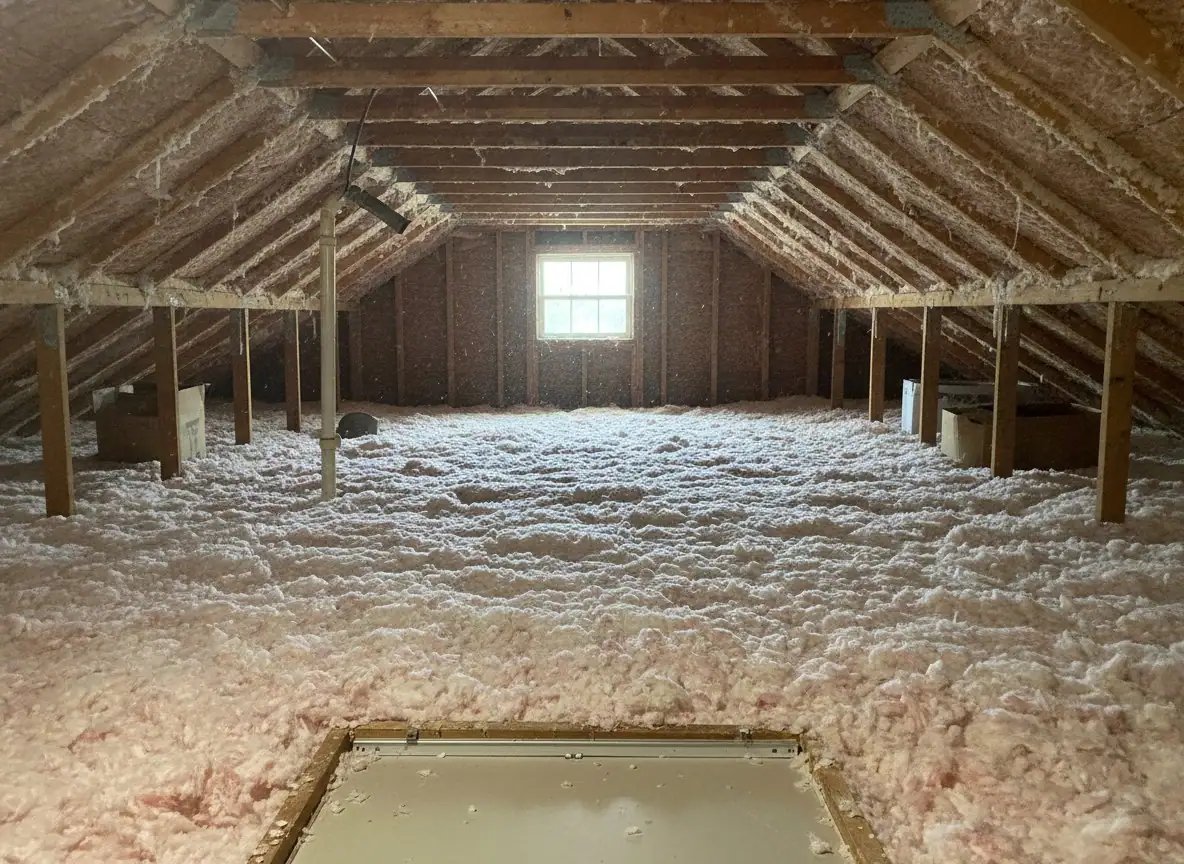
Clear Path Insulation is a locally operated insulation and air sealing company serving Vernon and the broader eastern Los Angeles Basin. Our technicians understand the specific construction history, industrial environment, and climate conditions that make Vernon properties uniquely challenging — from the seismic micro-cracking common in pre-1971 masonry structures to the pollutant infiltration risks associated with proximity to rendering plants and heavy truck corridors on Bandini Boulevard.
We use diagnostic-driven processes — including calibrated blower door testing and FLIR thermal imaging — rather than guesswork, ensuring that every dollar spent on air sealing delivers a measurable reduction in air leakage. Our comprehensive service menu means we can coordinate air sealing with insulation installation, insulation replacement, and crawl space encapsulation as part of a single, efficient project.
Read moreShow less
We are committed to transparent, itemized pricing with no hidden fees, and we help our customers identify applicable Southern California Edison and SoCalGas rebate programs to reduce out-of-pocket costs. Call (323) 416-2078 to speak with a Vernon-area air sealing specialist today.
FAQ
Frequently Asked Questions About Air Sealing in Vernon, CA
How much does air sealing cost in Vernon, CA?
Residential air sealing projects in Vernon and surrounding communities typically range from $800 to $2,500 for homes under 2,500 square feet. Commercial and warehouse properties cost more — generally $3,000 to $18,000 for mid-size buildings — due to greater square footage, more complex penetration types, and fire-rated sealing requirements. Contact us for a free itemized estimate specific to your property.
How long does an air sealing project take in Vernon?
A typical residential air sealing project in Vernon takes one full day (6–8 hours) including diagnostic testing, sealing application, and post-verification. Commercial warehouse projects range from one to three days depending on building size and the complexity of penetrations. We work around your business operations whenever possible to minimize disruption.
Will air sealing help with industrial odors entering my Vernon building?
Yes, significantly. Air sealing reduces the uncontrolled pathways through which outdoor air — and with it, particulate matter, diesel exhaust, and industrial process odors common in Vernon’s industrial corridor — enters interior spaces. While air sealing alone does not filter the air, it works in conjunction with mechanical ventilation systems to give you control over where and how outside air enters, rather than allowing it to infiltrate through random gaps throughout the building envelope.
Do I need a permit for air sealing in Vernon?
In most cases, air sealing alone does not require a building permit in Vernon or Los Angeles County. However, if air sealing is combined with insulation installation or HVAC modifications, permit requirements may apply under California Title 24 energy compliance rules. Our team can advise you on permit requirements specific to your project scope.
How do I know if my Vernon warehouse has significant air leakage?
The most reliable method is a calibrated blower door test, which measures air leakage in CFM50 across the entire building envelope simultaneously. Without testing, common indicators include visible daylight through wall or roof penetrations, elevated energy costs relative to comparable facilities, difficulty maintaining temperature setpoints on hot days, and outdoor pollutant odors inside the building during wind events.
Does air sealing make a building too airtight in Vernon’s climate?
A properly sealed building in Vernon is not too airtight when mechanical ventilation is in place. California’s Title 24 standards and ASHRAE 62.2 (residential) and 62.1 (commercial) ventilation standards specify minimum outdoor air requirements that are met through controlled mechanical ventilation — not through random air leakage. Air sealing gives you control over your indoor air quality rather than leaving it to chance, which is especially important in Vernon given regional outdoor air quality concerns.
Can air sealing be done while my business is operating?
For most commercial applications in Vernon, air sealing work can be phased by zone so that operations continue in unaffected areas. Some materials, including two-component spray foam, require temporary occupant evacuation during application due to off-gassing during cure — typically 1–4 hours. We schedule these phases strategically and notify all stakeholders in advance.
Should I combine air sealing with insulation in my Vernon property?
Absolutely. Air sealing and insulation are complementary: sealing stops air-transported heat and moisture from bypassing insulation layers, while insulation slows conductive and radiative heat transfer through solid building materials. Combining both services in a single project is more cost-effective and delivers better energy performance than either service alone. Ask about our bundled pricing for attic insulation and air sealing projects.
Get Professional Air Sealing in Vernon, CA — Call Clear Path Insulation Today
Whether you own a pre-war masonry warehouse in Vernon’s industrial core, a residential bungalow in adjacent Maywood or Bell, or a modern tilt-up facility near the Bandini Boulevard corridor, Clear Path Insulation has the local knowledge, diagnostic tools, and proven methods to dramatically reduce your building’s air leakage — lowering energy costs, improving indoor comfort, and protecting occupants from Vernon’s challenging industrial air quality environment.
Don’t let uncontrolled air infiltration continue to drive up your utility bills and compromise your indoor environment. Our team is ready to assess your property, provide a transparent estimate, and complete the work efficiently with minimal disruption to your operations.
Read moreShow less
Call us now at (323) 416-2078 to schedule your free air sealing assessment in Vernon, CA. We serve Vernon, Maywood, Bell, Commerce, East Los Angeles, Huntington Park, South Gate, and all surrounding communities in the eastern Los Angeles Basin.
Get in touch
Find insulation help near you
Request a free estimate online or give us a call — our team will follow up quickly.
- Call us(323) 416-2078
- Visit5333 S Downey Rd, Vernon, CA 90058
- HoursMon-Sun 07:00-19:00