
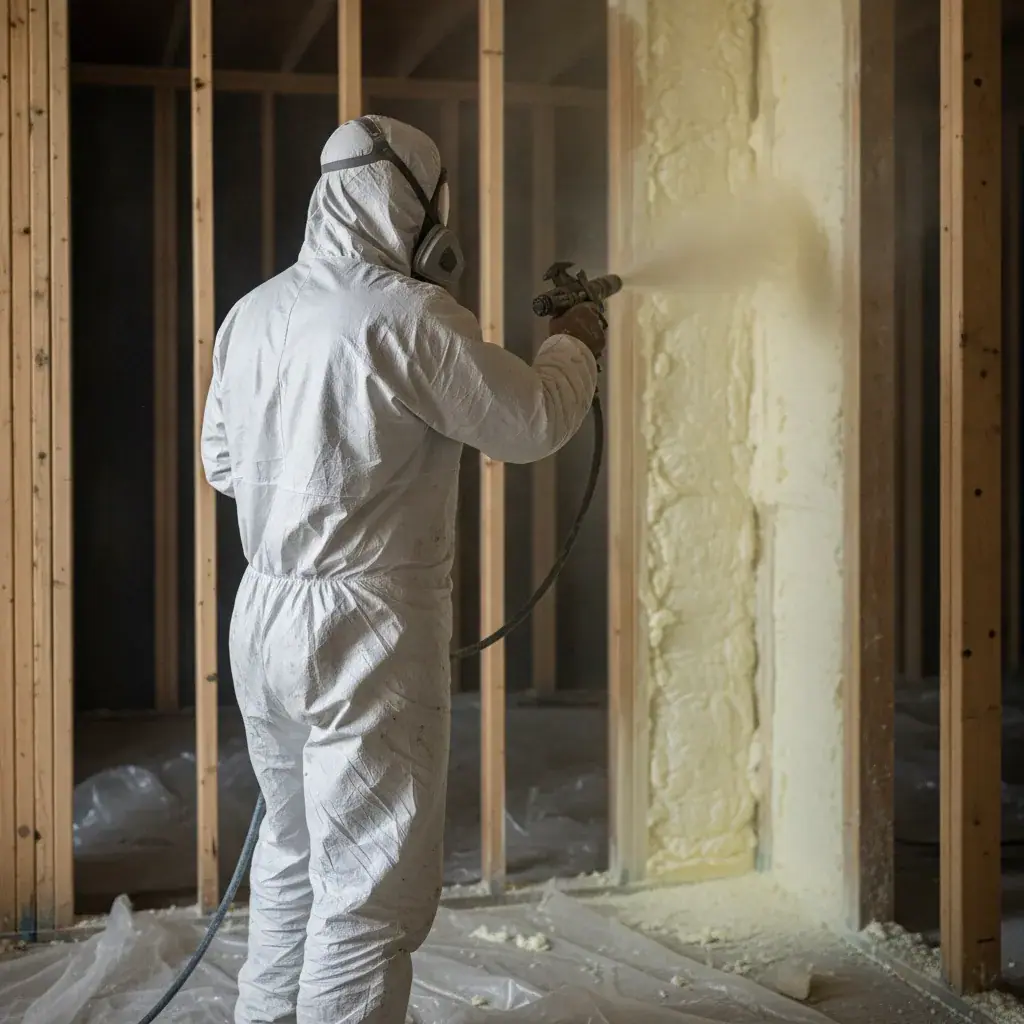
Spray Foam Attic Insulation in Vernon, CA
Energy-Saving Spray Foam Attic Insulation for Vernon, CA Homes — Licensed & Insured
Clear Path Insulation offers expert spray foam attic insulation in Vernon, CA. Cut energy costs, seal air leaks & meet Title 24. Free quote: (323) 416-2078.
Spray foam attic insulation is a high-performance insulation solution that seals and insulates your attic space simultaneously, creating an airtight thermal barrier that dramatically reduces energy loss. Unlike traditional batt or blown-in materials, spray polyurethane foam expands on contact to fill every gap, crack, and irregular surface — making it the most effective option available for attic insulation in Vernon, CA.
Vernon is a uniquely dense industrial city in Los Angeles County, where commercial and light-industrial buildings sit alongside residential structures in tight proximity. The region’s hot, dry summers — frequently pushing past 95°F — combined with aging building stock and elevated urban heat island effects make proper attic insulation not just a comfort upgrade but a genuine necessity. Clear Path Insulation brings deep local knowledge and proven spray foam expertise to every project in Vernon and the surrounding communities. Call us today at (323) 416-2078 to schedule your free attic assessment.
Understanding Spray Foam Attic Insulation
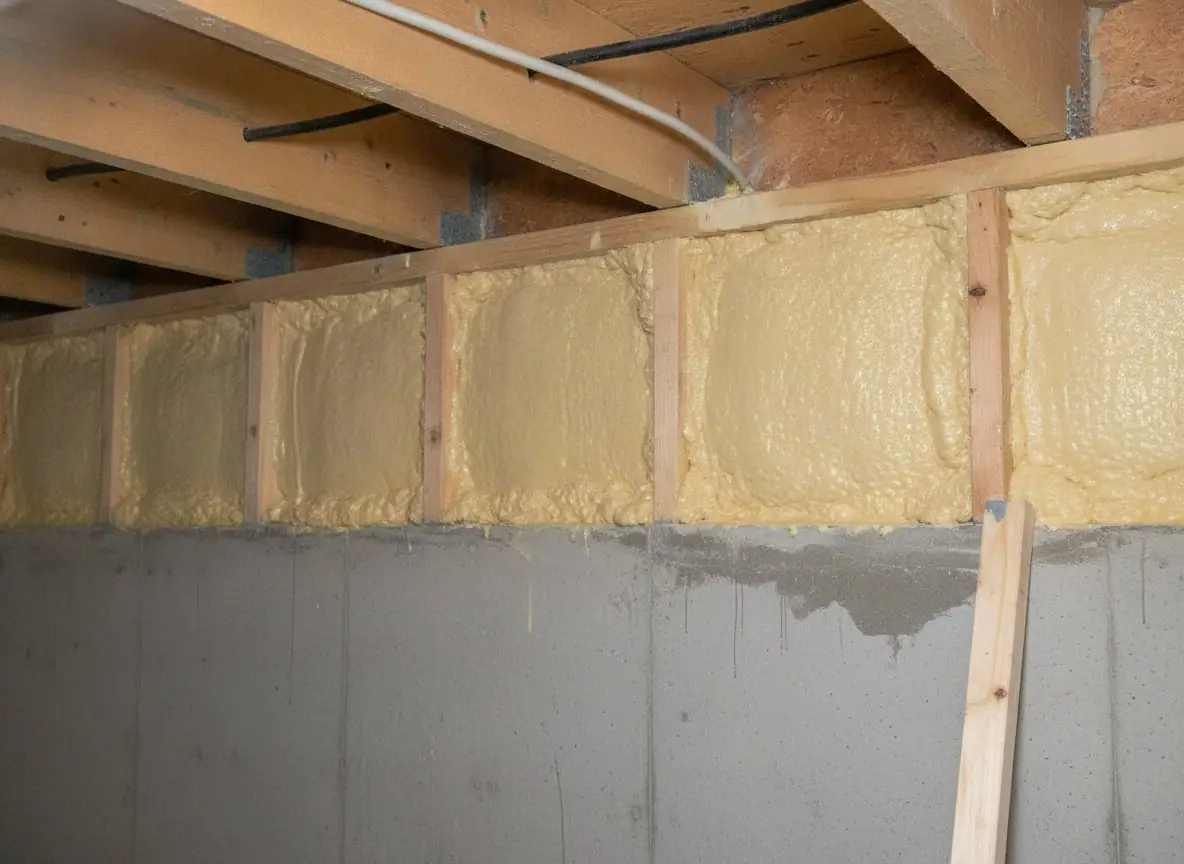
Spray foam attic insulation is applied as a two-component liquid — isocyanate and polyol resin — that reacts chemically upon mixing at the spray gun tip. Within seconds, the mixture expands up to 100 times its liquid volume and cures into a rigid or semi-rigid foam that bonds permanently to wood, concrete, metal, and drywall substrates. This expansion behavior is what sets spray foam apart from every other insulation type: it physically seals the building envelope rather than simply filling a cavity.
There are two primary varieties. Open-cell spray foam (roughly 0.5 lb/ft³ density) cures into a soft, spongy material with an R-value of approximately R-3.7 per inch. It is vapor-permeable and cost-effective for interior attic applications. Closed-cell spray foam (2.0 lb/ft³ density) cures into a hard, rigid material with an R-value of approximately R-6.5 per inch and acts as both an air barrier and a vapor retarder — ideal for extreme temperature differentials.
Read moreShow less
Historically, spray polyurethane foam was developed in the 1940s and became widely available for residential and commercial construction in the 1970s following the energy crises that pushed the building industry to seek superior insulation solutions. By the 1990s, spray foam had become the standard for commercial roofing and specialty applications, and its adoption in residential attics accelerated through the 2000s as energy codes tightened across California.
In Vernon specifically, the building stock reflects the city’s history as a purpose-built industrial municipality incorporated in 1905. Many structures date from the post-WWII manufacturing boom of the 1940s through 1960s, when insulation was minimal by today’s standards or applied with materials — such as fiberglass batts compressed into tight rafter bays — that have long since degraded. Flat or low-slope rooflines common on commercial and mixed-use buildings in Vernon benefit especially from the monolithic coverage spray foam provides, eliminating the complex air leakage paths that baffle other insulation materials.
Whether your Vernon property is a converted warehouse, a small residential bungalow near Bandini Boulevard, or a newer commercial suite, spray foam attic insulation addresses the full spectrum of thermal and air-sealing challenges these structures present. Learn more about our full spray foam insulation services.
Why Spray Foam Attic Insulation Is Needed in Vernon, CA
Extreme Urban Heat Island Effect
Vernon sits at the geographic center of one of Southern California’s most intense urban heat islands. Surrounded by Maywood to the south, Commerce to the east, Boyle Heights to the north, and East Los Angeles to the northeast, Vernon is dominated by asphalt, concrete, and metal-roofed warehouses that absorb and re-radiate solar heat throughout the day and into the night. NOAA data consistently shows that Vernon and adjacent industrial corridors can run 8°F to 12°F hotter than coastal Los Angeles neighborhoods during peak summer months. Attic air temperatures in structures without proper insulation routinely exceed 150°F in July and August — temperatures that cause HVAC systems to work continuously and shorten equipment lifespans significantly.
Southern California’s Mediterranean Climate Extremes
While Vernon rarely experiences hard freezes, the Mediterranean climate produces significant seasonal swings. Summers feature prolonged periods of 95°F to 105°F heat — the September 2022 heat dome pushed temperatures in the Los Angeles basin to historic records, with inland industrial areas like Vernon reaching well above 108°F during the peak September 6–7 period. Winters bring cool, damp conditions with nighttime lows occasionally dipping below 45°F. This diurnal and seasonal temperature range places repeated thermal stress on roofing materials and insulation, accelerating degradation of fiberglass batts and making airtight closed-cell foam particularly valuable.
Aging Building Stock and Air Leakage
The majority of Vernon’s structures were built between 1920 and 1975, before California’s Title 24 energy code was enacted in 1978. These buildings were constructed with little or no attic insulation, or with insulation that has compacted, moisture-damaged, or become contaminated over decades of industrial operation. Buildings along Fruitland Avenue, Santa Fe Avenue, and Bandini Boulevard — many of which have been converted from single-use industrial to mixed commercial or light residential occupancy — frequently present attics with R-values as low as R-4 to R-7, a fraction of California’s current minimum of R-38 for climate zone 10.
Industrial Particulate and Moisture Infiltration
Vernon’s industrial character means attics in the area are exposed to higher-than-average particulate matter from nearby manufacturing and transportation corridors, including the I-710 (Long Beach Freeway) running just west of the city. Particulate infiltration through unsealed attic cavities degrades existing insulation and reduces indoor air quality. Simultaneously, Vernon’s proximity to the Los Angeles River corridor means certain properties face elevated ground-level humidity during winter storm events, with moisture finding its way into attic spaces through existing gaps and penetrations — a problem spray foam’s seamless seal directly eliminates.
Energy Cost Pressure
Southern California Edison rates for the Los Angeles basin have risen steadily, with residential and commercial customers in Vernon’s ZIP code (90058) seeing rate increases of approximately 20–25% between 2020 and 2024. For businesses and residents in an already high-cost market, eliminating 30–50% of attic-related heat gain through spray foam insulation delivers measurable, immediate returns on investment. Explore all of our attic insulation solutions for Vernon properties.
Free, no-obligation estimates
Talk to Clear Path Insulation
Tell us what you need and we’ll take it from there.
Signs You Need Spray Foam Attic Insulation in Vernon
Energy and Comfort Indicators
- Monthly energy bills have increased more than 15% year-over-year without a change in usage patterns
- Rooms on the top floor or directly below the roof feel significantly hotter than lower floors during summer
- Your HVAC system runs almost continuously during Vernon’s peak summer months (July–September) without reaching the set temperature
- Noticeable drafts or hot air movement when entering the attic space
Physical and Structural Symptoms
- Existing fiberglass batts appear compressed, discolored, or moisture-stained
- Visible daylight through roof deck gaps or around duct penetrations in the attic
- Settled or uneven blown-in insulation with areas of missing coverage
- Pest intrusion evidence (droppings, nesting material) in the attic, indicating unsealed entry points
- Roof deck showing early signs of moisture damage, mold, or dark staining on the underside
Urgency Indicators
- A licensed energy auditor has identified the attic as the primary source of building envelope air leakage
- Your property is approaching a sale, lease renewal, or Title 24 compliance review
- You have recently replaced HVAC equipment and want to protect that investment with proper building-envelope performance
If you recognize two or more of these signs, contact Clear Path Insulation at (323) 416-2078 for a no-obligation evaluation.
Our process
Our Spray Foam Attic Insulation Process in Vernon
Clear Path Insulation follows a systematic, transparent process on every Vernon project to ensure quality, safety, and long-term performance.
- 01
Free On-Site Assessment (1–2 Hours)
Our technician visits your Vernon property to measure attic dimensions, evaluate existing insulation conditions, identify air leakage pathways, assess roof deck condition, and document any moisture, pest, or structural concerns. We check for knob-and-tube wiri
- 02
Insulation Removal (If Required, Half to Full Day)
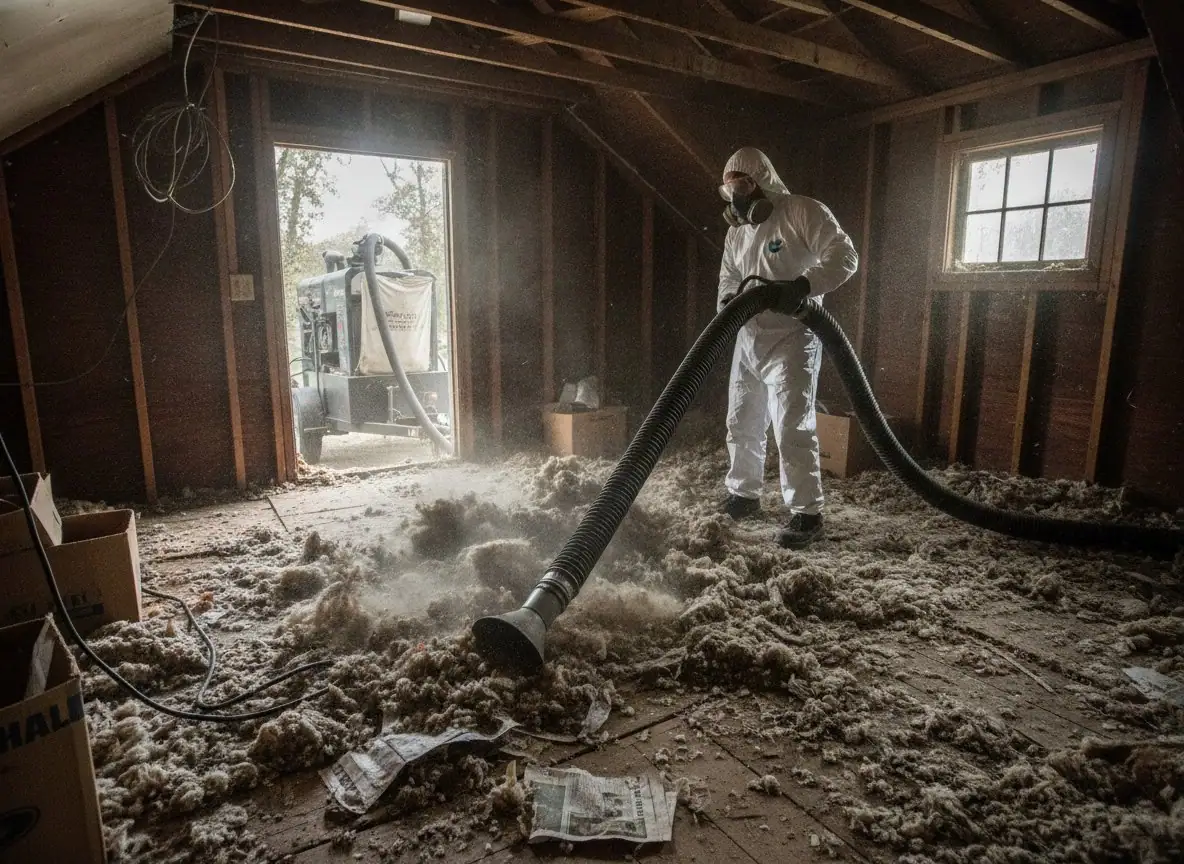
If existing insulation is damaged, contaminated, or presents a health concern, our crew performs safe mechanical removal using commercial vacuum equipment, bagging and disposing of all material in accordance with California disposal regulations. Learn about ou
- 03
Air Sealing Prep and Surface Preparation (2–4 Hours)
All penetrations — electrical boxes, plumbing stacks, HVAC boots, and recessed lights — are sealed or prepped with appropriate backing materials. Surfaces are confirmed dry, as Vernon’s winter humidity can affect adhesion if moisture is present on substrate ma
- 04
Spray Foam Application (4–8 Hours Depending on Area)
Technicians wearing full PPE (respirators, suits, gloves) apply spray foam in controlled passes, building up thickness incrementally to achieve the specified R-value. For Vernon’s climate zone 10, we target a minimum of R-38 for open-cell applications and R-25
- 05
Cure Time and Inspection (1–24 Hours)
Spray foam requires a minimum cure period before the space is safe for re-occupancy — typically 24 hours for full off-gassing clearance. Our team inspects all surfaces for uniformity, voids, and proper adhesion before signing off.
- 06
Final Walkthrough and Documentation
We provide you with a written report documenting installed R-values, material specifications, and photographs — documentation useful for Title 24 compliance records, insurance, and future property transactions.
Spray Foam Methods and Approaches We Use
Closed-Cell Spray Foam (2.0 lb)
The highest-performing option, closed-cell spray foam delivers R-6.5 per inch and functions as a vapor retarder at thicknesses of 2 inches or more. We recommend closed-cell for Vernon commercial properties, flat-roof applications, and any structure where moisture management is a concern. It also adds structural rigidity to aging roof decks — a meaningful benefit for buildings constructed before modern sheathing standards.
Open-Cell Spray Foam (0.5 lb)
Open-cell foam provides R-3.7 per inch and is the preferred choice for residential attics where budget is a priority and vapor permeability is acceptable. Applied at 5.5 inches in rafter bays, it achieves approximately R-20 and provides excellent air sealing. Vernon residential properties with adequate roof ventilation are well-suited to open-cell applications.
Hybrid Approach: Closed-Cell Base with Open-Cell Topping
For maximum performance at a managed cost, we apply 2 inches of closed-cell foam (R-13) directly to the roof deck for vapor control and structural benefit, then fill the remaining cavity with open-cell foam to achieve total R-values of R-30 to R-38. This hybrid method is particularly effective on Vernon’s older wood-framed structures with shallow rafter bays.
Flash and Batt
Where budget is the primary constraint, a 1-inch flash coat of closed-cell spray foam seals the roof deck completely, followed by conventional batt insulation in the cavity. This achieves code-minimum performance at a lower material cost while still delivering the critical air-sealing benefit that batts alone cannot provide. See how blow-in insulation compares as an alternative option.
Spray Foam Attic Insulation Cost in Vernon, CA
Understanding the cost of spray foam attic insulation in Vernon helps you plan your investment accurately. Pricing depends on foam type, attic area, existing conditions, and any preparatory work required.
Typical Price Ranges
- Open-cell spray foam: $1.00–$1.50 per board foot (one square foot at one inch thick). For a 1,000 sq ft attic insulated to 5 inches, expect $5,000–$7,500.
- Closed-cell spray foam: $1.75–$3.00 per board foot. A 1,000 sq ft attic at 3 inches runs approximately $5,250–$9,000.
- Hybrid closed/open-cell: $6,000–$10,000 for a typical Vernon residential attic of 800–1,200 sq ft.
- Flash and batt: $2,500–$4,500 for the spray foam component on an average attic.
Additional Cost Factors
- Insulation removal: $1.00–$2.00 per sq ft if old insulation must be extracted first
- Attic access limitations: Tight or low-clearance attics common in Vernon’s older structures may add 10–15% for additional labor
- Duct sealing or HVAC rerouting: $300–$800 if ducts require repositioning before foam application
Read moreShow less
Vernon-Specific Pricing Notes
Los Angeles County labor costs run approximately 15–20% higher than national averages, reflected in Vernon pricing. However, California utility rebates — including those available through Southern California Edison’s Energy Savings Assistance Program for qualifying customers — can offset $500–$2,000 of project cost. Call us at (323) 416-2078 for a precise, itemized quote specific to your Vernon property.

Neighborhoods and Communities We Serve Near Vernon
Maywood and Bell
These dense residential communities directly adjacent to Vernon feature a high proportion of 1940s–1960s single-family homes with minimal original insulation. Many properties have been subdivided into multi-unit dwellings, increasing energy load and making attic insulation upgrades especially cost-effective for landlords and owner-occupants alike.
East Los Angeles and Boyle Heights
North of Vernon, these communities contain a mix of early 20th-century Craftsman bungalows, post-WWII ranch homes, and commercial buildings. Shallow rafter cavities and original knob-and-tube wiring are common challenges our technicians are trained to navigate safely.
Commerce and Montebello
East of Vernon, Commerce and Montebello include industrial-to-residential conversion properties and suburban tract homes from the 1950s–1980s. Flat and low-slope roof profiles on converted commercial spaces make closed-cell spray foam the method of choice for airtight performance.
Huntington Park and South Gate
These working-class communities south of Vernon have significant housing stock from the 1930s through 1950s. Our team regularly addresses deteriorated original insulation, rodent damage, and moisture infiltration in these markets. View our full service area coverage.
Attic Insulation Maintenance Tips for Vernon Property Owners
- Inspect attic access points annually — Check the attic hatch or pull-down stair seal each fall before Vernon’s rainy season (November–March) to ensure the weatherstripping remains intact and airtight.
- Monitor for moisture after heavy rain events — After any storm dropping more than 0.5 inches of rain (not uncommon during El Niño winters), visually inspect the spray foam surface for discoloration or drips indicating roof penetration.
- Keep HVAC duct connections sealed — Spray foam bonds to ducts, but duct connections can separate over time. Re-check mastic seals at duct joints every 2–3 years.
- Trim overhanging trees — Properties in residential pockets near Vernon can have mature trees whose branches deposit debris on roofs, accelerating shingle wear and potential leak pathways into the attic.
- Control attic pests proactively — Spray foam is not a food source for rodents, but gnawing rodents can breach foam surfaces. Address any rodent entry points at the roofline immediately if evidence appears.
- Verify ventilation intake and exhaust remain clear — If your attic uses a vented design alongside spray foam on the roof deck, ensure soffit vents are not blocked by insulation or debris.
- Schedule a professional re-inspection every 5–7 years — Spray foam is highly durable, but a professional inspection ensures performance is maintained and identifies any areas of UV degradation on exposed foam surfaces.
Why Choose Clear Path Insulation for Your Vernon Attic Project
Clear Path Insulation is a dedicated insulation contractor serving Vernon and the greater Los Angeles industrial corridor. Our technicians have hands-on experience with the specific building types, climate conditions, and code requirements that define the Vernon market — from aging industrial conversions along Soto Street to residential bungalows tucked between warehouses on Leonis Boulevard.
We specialize exclusively in insulation services: insulation installation, spray foam, attic insulation, blow-in insulation, crawl space encapsulation, crawl space insulation, insulation removal, and insulation replacement. This focused expertise means every member of our team understands insulation science deeply rather than treating it as a side service.
Read moreShow less
We use only commercial-grade spray foam systems from proven manufacturers, and every project is performed by trained, equipped technicians — not subcontractors. Our assessment process is always free and never high-pressure. We document every project thoroughly for your records, and we stand behind our workmanship with direct accountability to you, the property owner.
Call Clear Path Insulation today at (323) 416-2078 and let us show you why Vernon property owners trust us with their most important thermal envelope decisions.
FAQ
Frequently Asked Questions: Spray Foam Attic Insulation in Vernon, CA
How much does spray foam attic insulation cost in Vernon, CA?
In Vernon and the surrounding Los Angeles County area, open-cell spray foam typically runs $1.00–$1.50 per board foot, while closed-cell foam runs $1.75–$3.00 per board foot. For a typical Vernon residential attic of 1,000 square feet, total project costs commonly fall between $5,000 and $10,000 depending on foam type and attic conditions. Contact us for a free, site-specific quote.
How long does spray foam attic insulation last?
Properly applied spray foam is one of the most durable insulation materials available, with an expected service life of 80 years or more when protected from direct UV exposure. In Vernon’s climate, where the foam is sheltered inside an attic space, degradation is minimal. Unlike fiberglass batts, spray foam does not compact, sag, or lose R-value over time under normal conditions.
How long does the installation take for a Vernon property?
For an average residential attic in Vernon (800–1,500 sq ft), installation takes one full workday — typically 6 to 8 hours of on-site time. Larger commercial attics or projects requiring prior insulation removal may require 2 days. The space should remain unoccupied for 24 hours after application to allow complete off-gassing and curing.
Is spray foam attic insulation required to meet California Title 24 in Vernon?
California Title 24 does not mandate spray foam specifically, but it does require attic insulation to meet minimum R-38 in climate zone 10 (which covers Vernon). Spray foam is one of the most efficient ways to achieve this requirement, especially in attics with limited depth or complex geometries. Our installations are fully documented for Title 24 compliance reporting.
Can spray foam attic insulation reduce my energy bills in Vernon’s hot climate?
Yes — studies and real-world data consistently show that air-sealing the attic with spray foam can reduce HVAC energy consumption by 25–40% in hot climates like Vernon’s. Given that attic heat gain is often the single largest driver of summer cooling loads in Los Angeles County buildings, spray foam delivers some of the fastest payback periods of any home energy upgrade — often 3–7 years.
Does Clear Path Insulation remove old insulation before spraying?
We evaluate existing insulation on a project-by-project basis. If existing material is structurally sound, dry, and free of contamination, we can sometimes spray foam directly over it. However, most Vernon properties with pre-1980s insulation benefit from removal first to address pest contamination, moisture damage, and to allow proper inspection of the roof deck before foam is applied. Learn more about our insulation removal process.
Is spray foam safe for my Vernon home or business?
Once fully cured (24 hours after application), spray foam is inert and poses no health risk. During application, our technicians use full personal protective equipment and the space must be vacated. We follow all California OSHA and EPA guidelines for spray foam application, including proper ventilation protocols and material handling procedures specific to occupied urban areas like Vernon.
Do you serve areas near Vernon, such as Huntington Park or Commerce?
Yes. Clear Path Insulation serves Vernon and all adjacent communities including Huntington Park, Commerce, Maywood, Bell, Boyle Heights, East Los Angeles, South Gate, Lynwood, Montebello, and throughout the broader Los Angeles area. Our crews are familiar with the building types and permit requirements specific to each jurisdiction. See our complete service area list.
Get a Free Spray Foam Attic Insulation Quote in Vernon, CA Today
Don’t let another scorching Vernon summer drive your energy bills higher than they need to be. Clear Path Insulation is ready to assess your attic, explain your options in plain language, and provide a detailed written quote at no cost and no obligation.
Whether you own a residential property, a mixed-use building, or a commercial space anywhere in Vernon or the surrounding communities, our team has the expertise and equipment to deliver a high-performance spray foam attic insulation solution that pays for itself in energy savings.
Call us now at (323) 416-2078 to schedule your free on-site assessment. Our team is available Monday through Saturday and responds to all inquiries promptly. Take the first step toward a cooler, more energy-efficient Vernon property — contact Clear Path Insulation today.
Get in touch
Find insulation help near you
Request a free estimate online or give us a call — our team will follow up quickly.
- Call us(323) 416-2078
- Visit5333 S Downey Rd, Vernon, CA 90058
- HoursMon-Sun 07:00-19:00